

The prodigal child, p.1
The Prodigal Child, page 1


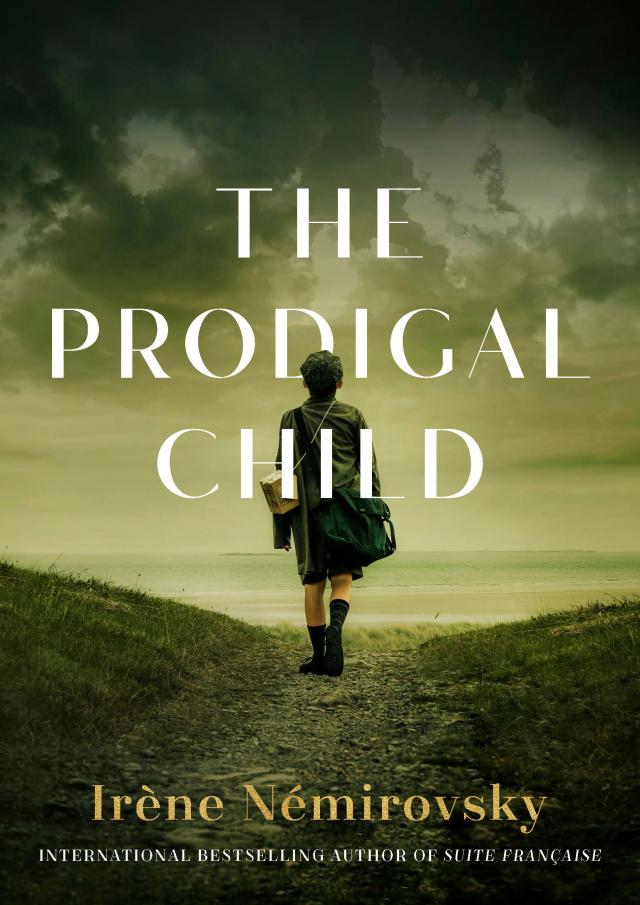
THE
PRODIGAL
CHILD
Irène Némirovsky
Translated from the French by
Sandra Smith
It is not the luxury that you admire.
You imagine a perfect life in which everything
is order and beauty.
—IRÈNE NÉMIROVSKY,
DIARY ENTRY, 1920,
FORESHADOWING THE PRODIGAL CHILD
INTRODUCTION
Irène Némirovsky was born in Kiev in 1903. Her father, Léon, was a wealthy banker, which was unusual at the time, as he was Jewish. His position allowed the family to enjoy a luxurious lifestyle, including a French governess for their daughter, as French was considered the language of the upper classes and diplomats at the time. Irène’s first languages, therefore, were French and Russian, and all her works were written in French. At the beginning of the 1917 Revolution, the family was forced to flee, and after a few years in Scandinavia, they finally settled in Paris; Irène was sixteen. By then, she already spoke French, Russian, Finnish, and Swedish, as well as some English and German.
As an avid reader in many languages, Némirovsky was interested in different literary genres, something that is evident in this short novel. This work combines biblical parable with Greek mythology, fable, and elements of children’s fairy tales and yet is set in what was then contemporary Russia. As in all these genres, our story has a moral—or, rather, many morals.
The Prodigal Child is one of Némirovsky’s earliest works, written in 1923 (when she was only twenty years old) but not published until 1927. Its original title was L’enfant génial (“The Child Genius”), but the book was released in the Gallimard edition of 2006 as Un enfant prodige (“A Child Prodigy”). For this translation, I have chosen the title The Prodigal Child because of the overwhelming similarities between the biblical parable and the content of the novel. Némirovsky’s titles always have a multitude of suggestive meanings in French, and it is often up to the translator and publisher to choose a title that best describes a work.
Our tale begins with a clear reference to the Bible; its first two words are “Ishmael Baruch,” the name of the protagonist. The biblical Ishmael was the son of Abraham and his wife’s handmaiden, Hagar, born when Abraham believed that his wife, Sarah, could not bear children. But many years later, when Sarah gave birth to Isaac, she insisted that Hagar and Ishmael be cast out. Ishmael is credited with being a prophet—if not the founder—of Islam, while Abraham, Sarah, and Isaac carried on the line of Judaism.
The protagonist’s last name, Baruch, is the Hebrew word for “blessed,” and most Hebrew prayers begin with “Baruch atah Adonai” (“Blessed are you, O God”). So the novel begins with a paradox: the protagonist is both blessed and cast out. This theme continues throughout the work.
Ishmael’s “blessing” is his gift for composing poetry and songs—which is reminiscent of the Orpheus legend. His inspiration is completely natural, instinctive, and the novel thus deals with the concepts of creativity and inspiration as well:
Ishmael continued singing, and his heart grew lighter, lighter within his chest, like a bird about to take flight. And a strange clarity filled his mind, the kind of clarity that exhilaration or delirium sometimes brings….
Never did the boy think about the words in advance: they came to life in him like mysterious birds to whom he only needed to give a little nudge, and the music that accompanied those words came just as naturally.
When people discover Ishmael’s gift, his life changes completely. He meets a woman he calls “the Princess,” which adds the fairy-tale element to the novel. It is a rags-to-riches story, as she is fabulously wealthy and negotiates with his parents to have the child live with her in her mansion; she then takes charge of his education, in order to cultivate his genius.
The paradoxical symbolism continues throughout this novel. Némirovsky shows us a mirror image of the traditional genres that she so cleverly intertwines. In the parable of the prodigal son, the boy leaves with all his wealth, squanders it, and returns poor but is welcomed back and honored by his father. In the Bible, his father is meant to represent God, who forgives sinners if they repent and return to the fold. In Némirovsky’s tale, however, the child leaves poor, becomes fabulously wealthy—along with his parents—but is cast out by the Princess when he loses his gift, and his father is far from pleased.
Why does Ishmael lose his gift? Némirovsky offers several possible reasons in the text but leaves us to draw our own conclusions. Does spontaneity simply fade during the rite of passage that changes a boy into an adolescent? (Ishmael is only ten when the story begins and fifteen when it ends.) Is it his passionate attachment to and childlike love for the Princess? Or perhaps the reason lies in the discovery of the great classical authors he reads in the Princess’s library:
He loved the Princess with all his heart, with the feverish, ardent little heart of a prodigal child. As for the books, they made him jealous and unhappy; unconsciously, he started imitating the verses of others. When that happened, a kind of hateful rage surged through him: his former songs seemed laughable to him, pitiful. And short stories—he did not know why—seemed even worse. Up until now, he had looked at nature and people with his own eyes and translated what they meant to him very quietly through his own words. But now, suddenly, the distorting, perfidious mirror reflecting the soul of other people slipped in between the outside world and his own soul….
There were poems that he couldn’t speak out loud without weeping, and others that filled him with an emotion that was almost like terror. And when he remembered his songs, they seemed so pitiful, so awkward, so inept and foolish that he felt infinitely ashamed, humiliated, and miserable.
With passages such as these, Némirovsky poses questions that all artists ask themselves, and she unveils their innermost fears: they question their own talent, they will not compare favorably to others, the critics will use their influence to make or break them:
Then, to his dismay, he read scholarly books that analyzed the act of writing, all the complex cogs in the mechanism of creation, and he was like a man who, on the point of accomplishing some insignificant gesture, would have to seek out all the infinitesimal elements that make up the will to act, and he would be left dazed, distraught, facing the sheet of paper that remained obstinately blank. But when he looked up and saw the countryside stretched out before him, he would flee far away from human knowledge.
One final issue we encounter when reading this short novel is the representation of the Jews in the tale, an issue that needs to be placed in context. Némirovsky’s family was an exception in Russia at the turn of the twentieth century, when Jews were extremely limited in the professions they were allowed to practice, and most were very poor. Many of her novels depict the terrible conditions of the Jews living in the ghettos and the difficulties they faced due to their religion, especially in France during the 1930s, when anti-Semitism was rife. This novel is no exception. In the very first paragraph, we learn that Ishmael’s family had lost everything during “a pogrom.” His grandfather is a moneylender; the Jews in the market are expert at bartering. The Baruchs are extremely poor, live in the ghetto, and have many children, who either die or leave in search of a better life:
[The] family grew larger every year, for children multiplied like insects in the Jewish quarter. They grew up in the streets. They begged, argued, swore at passers-by, rolled around half-naked in the mud, ate vegetable peelings, stole, threw rocks at dogs, fought, filled the street with an ungodly clamor that never ceased.
Nevertheless, many of Némirovsky’s works stress the importance of acknowledging or returning to one’s roots, and many of her Jewish characters face disaster when they ignore that instinct and instead attempt to assimilate. Conversely, they find peace and hope when embracing their heritage.
To Ishmael as well, his Jewish roots are a positive influence and a source of inspiration:
Sometimes, he would tilt his head and begin slow, plaintive chants that these Slavs had never before heard, and that were simply an unconscious echo of the sad Jewish songs that arose from the depths of time like an immense sob, growing stronger and stronger through the ages, until they reached the child’s soul.
Sadly, Irène Némirovsky felt the brutal force of anti-Semitism during her brief lifetime. Never granted French citizenship, subject to the cruel laws against the Jews during the Nazi Occupation, which forbade her to be published, she was deported to Auschwitz in 1942 and murdered there at the age of thirty-nine. The same fate befell her husband, Michel Epstein, also a Russian Jew. Their two children, Élisabeth and Denise, survived; they escaped with a family friend and were hidden by teachers, nuns, and other Resistance workers until the end of the war.
We are fortunate that Denise Epstein discovered her mother’s unfinished masterpiece, Suite Française, and agreed to have it published in France in 2004. It has since been translated into more than forty languages. This one novel brought Némirovsky recognition throughout the modern world as the great author she was and allowed all of her previously published novels and numerous short stories to be rediscovered.
I was privileged to get to know Denise and become her friend. We traveled together on many book tours, and I was honored to serve as her interpreter. At the launch of the English translation of Suite Française in London, the very first time we met, she was in her mid-seventies. I will never forget her opening words: “I couldn’t accept my mother had died, until I could see her rebor n.”
In its lyricism, symbolism, mixing of genres and universal themes, The Prodigal Child bears all the marks of the important author Irène Némirovsky was to become.
Sandra Smith
New York, 2021
THE
PRODIGAL
CHILD
Ishmael Baruch was born on a very snowy day in March, in a large trading port on the Black Sea in southern Russia. His father lived in the Jewish part of town, not far from the Market Square, where he sold old clothes and scrap metal. He still wore a threadbare caftan, Oriental slippers, and the short side curls called payos,* as was ordained. His wife helped him with his work and bore his children. Over her hair, which had been shaved off on the day of her wedding, as commanded by the Law, she wore a curly black wool wig that made her look somewhat like a dark-complexioned woman whose skin had been bleached white by the rain and snow of the North. She was a hard worker, no more frugal than necessary, and well-mannered. She remembered the happier times of the past, for her father had been a rich moneylender before they burned down his house during a pogrom, on the Easter Sunday after the assassination of Emperor Alexander II.
The only thing Ishmael’s mother had left from her former opulence was a pair of gold hoop earrings that were more precious to her than her sight itself. They jingled with a bright mocking sound as she came and went in her creased, stained dress made of printed cotton, cleaning the house, washing the floors on Friday, or cutting the black bread and cloves of garlic into very small pieces, which she would feed to her household.
Her family grew larger every year, for children multiplied like insects in the Jewish quarter. They grew up in the streets. They begged, argued, swore at passers-by, rolled around half-naked in the mud, ate vegetable peelings, stole, threw rocks at dogs, fought, filled the street with an ungodly clamor that never ceased.
The Baruchs had fourteen of them. As soon as they were old enough, they left for the port, where they did all sorts of odd jobs: they helped the longshoremen and porters, sold watermelons they’d stolen, begged for alms, and prospered like the rats that scurried around the old boats along the coast.
Once in the clutches of the town or the sea, such children rarely returned home; many of them left on the large ships loaded with cereal and grains, headed for Europe.
But most of them died young. Epidemics among the infants ripped through the Jewish quarter, sweeping away children by the hundreds. That is how the Baruchs lost half of theirs. One of their neighbors, a carpenter, would nail together a few boards as a coffin, in exchange for an old pair of trousers or a dented saucepan. The mother would weep a little, undressing the little body and laying it down in the new box that smelled of pine sap. Baruch would carry it under his arm to the Jewish cemetery, a sad, enclosed plot of land where graves without crosses lay close together, a place where flowers never grew. Soon another child would be born to replace the one who had died, wearing his clothes and taking his place in the corner of the old straw mat that served as a bed for the whole family. Then he would grow up and go away as well.
When Ishmael was about ten years old, he found himself alone. He noticed that his portion of bread and garlic had gotten bigger. Then, one day, his father took him to the Rabbi who taught the Jewish alphabet to the children of that part of town. It cost one ruble a month, an amount Baruch would never have spent from his meager budget if he’d had other sons, or the hope of having more, but he and his wife were getting older, and Ishmael was their youngest.
Ishmael quickly learned to read, write, chant prayers, and recite verses from the Bible by heart.
It was warm at the Rabbi’s house, and in the winter, Ishmael loved staying there for hours on end, snuggling in the warmth of the wood-burning stove, while all around him, some twenty little voices repeated a plaintive, monotonous, holy verse, without ever growing weary. But when they wanted to teach him to count, he ran off, wandering around the port as his older brothers had before him.
The town was either baking hot in the summer sun or freezing in the glacial winter winds, but in springtime, the wild, free waves of the sea were infused with all the scents of Asia. Ishmael loved the town and the port. He also loved the Market Square on summer mornings, with its heaps of tomatoes, peppers, melons, and the golden strings of onions twisted around the workbenches. The merchants opened the red bellies of the fish; the small green tart apples that the housewives used to make preserves marinated in buckets of salty water. Ishmael would collect boubliks† that passers-by dropped on the ground, or a handful of cherries half-crushed by horses. Watermelon peels were scattered all over the streets; there were barrows heaped with the ripe fruit, as heavy and round as green moons. People would cut them into sweet, red, juicy pieces; as soon as Ishmael had a kopek in his pocket, he would buy one, then spend the rest of the day sucking its rosy flesh, which melted in his mouth.
On the Market Square, you could see people of three different races who stood shoulder to shoulder but never mixed: Russians, with their long, dirty beards, kind eyes in simple faces, each with two or three large features that make them look like white wooden toys, their Orthodox priests, with the long, straight hair of Christ, and peasants in cotton blouses, merchants in silk smocks. Then the Tartars, their heads wrapped in turbans, who never spoke much and were content to simply silently offer the buyers their trays full of nougat, Turkish delight, and Armenian incense. And, finally, the Jews, dressed in their grease-stained greatcoats, talkative, obsequious, hopping about like old birds, wading birds without feathers who understood everything, knew everything, sold everything, and bought even more.
And the sun streamed down over all these things, and the eternal sea breezes danced joyously in the dust, and when night fell, the bells from the Orthodox church rang out, calling, echoing, stifling the voice of the call to prayer from the rooftop of the only mosque, whose silent white silhouette softly faded into the night.
But more than all of them—Jews, Tartars, Russians—Ishmael preferred the unclassifiable riffraff that swarmed into the port, people from the Middle East who smelled of garlic, the tide, and spices, swept up by the sea from every corner of the world and thrust there like the foam on the waves.
They would sleep all day long in the shadow of the small fishing boats that rotted in the stagnant water of the port. But at night, they would meet in the nearby inns, to drink, fight, and, sometimes, sing in all the languages of all the countries of the world. Ishmael had made friends with several of them: sailors, porters, vagabonds. He helped them do their work, and in this way, he managed to earn his daily bread. When night fell, instead of going back to the shop, he would often follow them to the inn. These men enjoyed giving him drinks. By the age of ten, he had tasted all types of alcohol, imported from the four corners of the world: Russian vodka that tasted like fire, Turkish raki, gin, and other terrible concoctions, which he swallowed, grimacing horribly, but without complaining, proud of being admired.
Then his head would start to spin, the smoky walls of the tavern danced before his weary eyes, and through the sweet sleepiness that bound his arms and legs, the voices of the singers reached his ears, more mysterious and more intense.
A big lad named Sidorka, who had sailed the Volga for years on end before washing ashore on the Black Sea, taught Ishmael the songs they sang on the river. Ishmael soon knew them all by heart; he had a clear voice, both piercing and sweet at the same time, and he sang without ever growing weary, until he fell asleep, intoxicated as much by the music as by the eau-de-vie.
Sidorka lived with Lisanka, one of the sailors’ whores; she was pretty but had a terrible scar on her right cheek that disfigured her. Sidorka beat her mercilessly and regularly took the little money she earned. One day, she suddenly died. Sidorka sold the meager goods she’d left behind and went to the inn, and after he’d been drinking, he started to cry.






